
What Diseases Can Be Caused by Asbestos?
The most serious asbestos-related disease is malignant mesothelioma, a cancer of the thin layer of tissue surrounding the lungs.
However, people exposed to asbestos are at increased risk of developing other conditions.
Conditions Caused by Asbestos Exposure
- Pleurisy
- Pleural effusion
- Pleural scarring and thickening
- Pleural plaques
- Asbestosis
- Lung cancer
- Ovarian cancer
- Stomach cancer
- Laryngeal cancer

How Does Asbestos Cause Disease?
Researchers believe several factors contribute to how asbestos triggers cells to become damaged.
Long, thin fibers of the mineral are inhaled and work their way through the lungs. They lodge in the pleura, which is the membrane lining of the chest cavity and layer of tissue that surrounds the lungs.
Once stuck in the pleura, these fibers cause:
- Chronic inflammation
- Genetic mutations (changes)
- Production of abnormal cellular proteins
- Free radical (oxidation) damage to the tissue
A 2018 study published in Frontiers in Immunology details how asbestos fibers alter immune function. These immune changes promote additional tissue damage and allow cancerous cellular changes to continue unchecked.
With asbestosis, a chronic lung disease, the body has no way to expel inhaled asbestos fibers. The tiny, sharp particles become lodged in the lining of the lungs.
Over time, the body’s immune system responds to the fibers. Immune cells called macrophages try to engulf and remove the fibers, but ultimately they are unsuccessful.
The fibers lead to irritation and inflammation. The continued immune response to the fibers also contributes to the damage and thickening of tissue.
This results in cumulative scarring of the lungs’ air sacs (alveoli), which makes breathing difficult and diminishes lung capacity. It will also take more muscular effort and energy to breathe, contributing to fatigue and weight loss.

Types of Asbestos-Related Diseases
Asbestos-related diseases can range from mild to severe. Most of these conditions are not reversible or curable, but they can be managed with proper medical care.
Asbestos-Related Pleurisy
Pleurisy occurs when layers of the pleura rub against each other. Pleurisy is sometimes referred to as pleuritis. It can cause sharp pain that worsens during breathing.
Asbestos fibers lead to inflammation. Inflamed pleural membranes rub together, causing more inflammation.
This can lead to chest pain with each breath. Other symptoms include shortness of breath, pain in the back and shoulders, cough and fever. Pleurisy can lead to pleural effusion.
Pleural Effusion
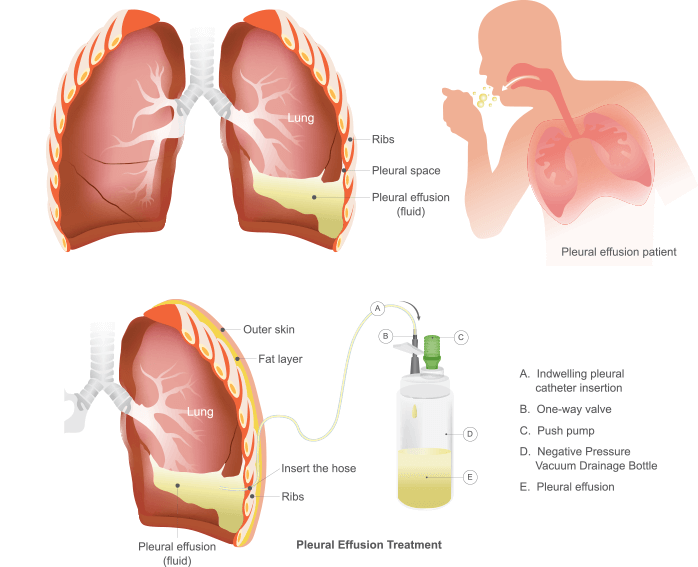
Pleural effusion occurs when fluid builds between the layers of the pleura. The fluid can cause pain and make breathing difficult. If enough fluid builds, pain may lessen because the layers of pleura no longer touch, even though breathing continues to worsen.
Large amounts of fluid may compress the lung to the point it partially or completely collapses and breathing becomes extremely difficult. If the fluid becomes infected, this is called an empyema. Fever is common with empyema.
To relieve the uncomfortable symptoms of pleural effusion, a doctor can drain the fluids from the chest. The fluids can then be tested for infection or cancer cells.
Pleural Scarring and Thickening

With repeated bouts of irritation from asbestos-related inflammation, pleurisy and pleural effusion, the pleura can sustain permanent damage, leading to scarring.
Diffuse pleural thickening occurs with extensive scarring of the pleura. The scarring leads to large areas of thickening on the pleura. This condition is permanent, meaning once it occurs, it cannot be cured or lessened.
This is one of the most common signs of asbestos exposure. While diffuse pleural thickening is not curable, symptoms can be managed with steroids and bronchodilators to ease breathing. This can improve quality of life and make the condition more manageable.
Pleural Plaques

Pleural plaques are essentially scars affecting the lungs and pleural membranes. These plaques occur when collagen is deposited on the pleura in response to asbestos exposure.
Plaques often do not produce noticeable symptoms and are typically detected only during routine screenings of asbestos-exposed individuals or by chance during X-rays or CT scans taken for other reasons.
There is disagreement among experts on whether pleural plaques increase the risk of mesothelioma. Both conditions are related to asbestos exposure and around half of people regularly exposed to asbestos go on to develop plaques, making the question difficult to answer.
Asbestosis

Asbestosis is a chronic lung disease caused by inhaling asbestos fibers. It is characterized by scarring in the lungs and shortness of breath. Symptoms can range from mild to severe.
This condition is similar to pleural mesothelioma in that the disease occurs many years to decades after initial asbestos exposure.
The most common symptom of asbestosis is pulmonary fibrosis, which is seen as scarring and thickening of the lungs. These lung changes result in stiffness, so the lungs cannot easily expand and contract, making breathing difficult.
Other symptoms include persistent dry cough, tightness or pain in the chest and loss of weight and appetite.
There is no cure for asbestosis. Your doctor will focus on relieving disease symptoms, improving your quality of life and minimizing progression of the condition.
Asbestos Lung Cancer

There is agreement among asbestos specialists and lung cancer experts that prolonged asbestos exposure contributes to an increased risk of lung cancer.
However, the lung cancer risk from smoking is much higher than the risk associated with asbestos exposure. Only about 4 percent of lung cancer deaths are attributed to asbestos exposure, while 80 percent are linked to cigarette smoking.
The risk of lung cancer significantly increases in people with a history of smoking and heavy asbestos exposure.
Symptoms of lung cancer include shortness of breath, persistent cough, chest pain and hoarseness or wheezing. The five-year survival rate for asbestos-related lung cancer is better compared to pleural mesothelioma.
Ovarian, Stomach and Laryngeal Cancer

Asbestos fibers that cause damage to the lungs and pleura may damage other areas of the body.
Currently, the research is conflicting regarding how much asbestos exposure increases the risk of ovarian, stomach and laryngeal cancers.
Thousands of lawsuits against Johnson & Johnson involve women who allege asbestos contamination in the company’s talc-based products caused their ovarian cancer.
Some juries have sided with the plaintiff, awarding millions of dollars to ovarian cancer victims. Other juries have ruled in favor of talcum powder manufacturers, indicating they did not find the scientific evidence connecting asbestos-contaminated talcum powder to ovarian cancer persuasive.
Regardless of how these legal matters are settled, there is some evidence asbestos exposure may present a small but measurable increased risk of ovarian, stomach and laryngeal cancers.
Who Gets Asbestos-Related Diseases?
The majority of asbestos-related diseases occur in people previously employed where heavy and prolonged occupational asbestos exposure occurred.
Working in asbestos mines and processing plants, industrial facilities and shipyards exposed many people to this cancer-causing mineral.
Examples of occupations where asbestos exposure occurred:
- Asbestos miners
- Boiler operators and pipe fitters
- Commercial construction workers
- Aircraft and auto mechanics
- Electricians
- Railroad and shipyard workers
- Asbestos insulation installers and removers
- U.S. military
- Firefighters
Some family members have experienced secondhand asbestos exposure, which occurs when asbestos fibers are carried home on the clothing or skin of someone who works with the mineral.
Other people have a history of environmental asbestos exposure because they live near mines or naturally occurring asbestos deposits.
Still, the majority of asbestos-related diseases occur in people who have worked with or around asbestos for long periods of time.


